
Why I switched to Rabby Wallet, and why it’s worth your attention.
I used to juggle three browser extension wallets at once.
Whoa!
Seriously, that juggling felt like a low-budget circus act, with hardware keys on one side and approvals in another tab.
My instinct said there had to be a cleaner way.
At first, I tried to ignore the new entrants.
Hmm…
Initially I thought it would be another wallet with slick marketing and poor UX, but then I started testing Rabby more deliberately and noticed small, smart touches everywhere.
On one hand the UI is refreshingly uncluttered, though actually beneath that simplicity lies a power-user mindset.
I was pleasantly surprised.
Here’s the thing.
Rabby isn’t perfect, but it’s built around mitigating real browser-extension risks I care about.
For example it separates dApp permissions by site, shows clear spender warnings, and supports chain-specific gas controls so you don’t overpay on Layer 2s.
I’m biased toward tools that favor safety over flashy features.
That part bugs me about so many wallets.
My workflow changed.
I now keep Rabby installed as my primary extension for DeFi interactions, while leaving other wallets for cold-storage or experimental stuff.
Really?
Yeah — because Rabby reduces accidental approvals by making allowance management explicit and by grouping approvals in a way that matches how I think about apps and tokens.
There’s less surprise when a token asks for indefinite allowance.
I want to dig into a few practical features that sold me.
First: approval flow.
Rabby surfaces the spender address, the exact function being called when it can infer it, and offers one-click revocation or limited allowances, which forced me to re-evaluate every contract interaction.
Second: multichain posture.
Wow!
It handles Ethereum mainnet and Layer 2s with a sane chain-switching model, so you’re less likely to sign on the wrong network.
This is very very important for anyone using bridges.
My instinct said I needed something that made gas less mysterious.
And Rabby gives you chain-aware gas presets and readable fee estimates instead of cryptic wei values.
Hmm…
Security—let’s be practical.
Rabby doesn’t replace hardware wallets, though it integrates with them smoothly, which matters when you need to sign high-value transactions with a cold key.
Initially I thought it would be clumsy to use a hardware key with an extension, but then I realized the UX is thoughtful and actually really well done.
Something felt off about other wallets where hardware integration felt bolted-on.
I’m not 100% sure, but Rabby just feels more native.
There are convenience features too.
Transaction simulation is one — so you can preview token transfers as they would be processed on-chain.
On-chain previews cut down on surprises and gas refunds.
Oh, and by the way, the interface labels contract calls in plain language when it can infer them.
That saved me a couple of dumb mistakes.
Getting started and the one download I recommend
If you’re curious, try the official release, and do it from a trusted source.
I’ll be blunt — use the right download.
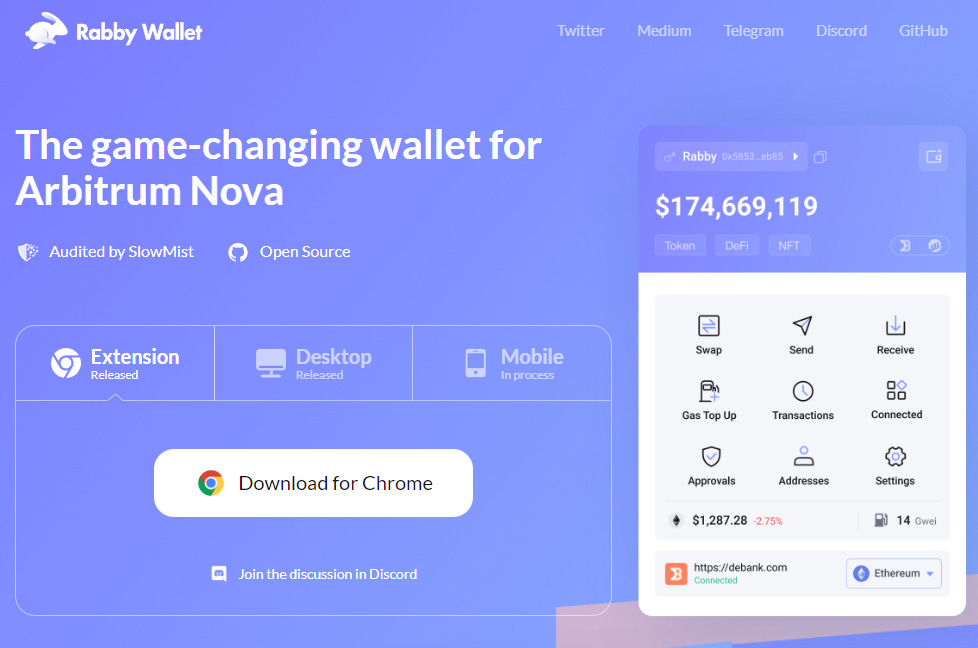
You can find the Rabby extension via this rabby wallet download which is the build I tested extensively and which got me out of several sloppy approval traps.
Installing takes a minute, and the import flow is straightforward if you have a seed phrase or a hardware device.
Seriously?
Do not import secrets into random forks.
I’m biased, but I also recommend you use a fresh profile or a dedicated browser to minimize extension bleed; it keeps things tidy and prevents accidental cross-site prompts.
On one hand the browser ecosystem is messy, though actually some habits reduce risk significantly.
Keep a consistent routine: update the extension, review approvals, reconnect hardware occasionally.
Somethin’ as small as a routine can save you grief later…
Rabby also appeals to power users because it exposes advanced controls without hiding them under twenty clicks.
You can batch revoke allowances, edit gas, and pin frequently used accounts.
I use those features when I’m doing yield farming or moving assets across chains.
There’s a little learning curve, but it’s worth it.
This part bugs me about other wallets that bury useful options.
One last practical note: integrations.
Rabby plays nice with dApps that use standard connectors, and for uncommon cases you can copy raw data into the extension for manual signing.
Initially I worried that manual signing would be a pain, but actually it’s a lifesaver for debugging transactions with dev teams or when interacting with less-known contracts.
That said, every extension adds attack surface, so pair Rabby with good habits.
Be skeptical. Always.
So yeah—I’m leaning into Rabby as my go-to extension for day-to-day DeFi.
It’s not magic; it won’t stop every scam, but it raises the bar on clarity and control in ways that actually change how I sign.
I’m biased toward tooling that teaches you to be safer.
If you care about minimizing mistakes, give it a spin and be deliberate about your setup.
I’ll be honest: it made my workflow less annoying and a bit more secure.
If you’re cautious, do a practice run with small amounts.
Really?
Yes — that’s how you build muscle memory without risking a lot of funds, and it’s how I teach clients to test new setups.
Good luck out there.
FAQ
Is Rabby safe to use?
Rabby aims to improve safety by making approvals explicit and by exposing transaction details in a readable way.
Hmm…
That doesn’t mean it’s invincible; browser extensions carry inherent risks, and you should still use a hardware wallet for large sums.
Use good habits: separate browser profiles, minimal allowances, and revocations when appropriate.
Be cautious.
Can I use Rabby with hardware wallets?
Yes, it supports common hardware devices and the integration is smooth.
Initially I thought pairing would be fiddly, though actually the flow is much better than I expected.
If you care about security, combine Rabby extension with a ledger or similar for signing.
Seriously?
Yup.
How should I download Rabby?
Stick to official browser stores or the team-maintained release notes, and verify signatures when available.
Double-check URLs; bad actors make convincing clones.
Wow!
If in doubt, ask community channels or use small test amounts first.
Stay alert.
